Winchester Dam
We have remained deeply invested in the evolving story of Winchester Dam — an aging structure that continues to hinder native fish passage, degrade habitat and break environmental laws.
Litigation & Legal Developments
- In February 2025, WaterWatch of Oregon, Steamboaters, and the Pacific Coast Federation of Fishermen’s Associations (PCFFA) secured permission to intervene in a state fish-passage enforcement proceeding, supporting ODFW’s order for new and upgraded upstream and downstream fish facilities at Winchester Dam.
- In May 2025, the ODFW formally filed a $27.6 million damages claim against Winchester Water Control District (WWCD) and its contractors. The lawsuit addresses the avoidable death of over 550,000 juvenile Pacific lamprey during repair work in August 2023 – an environmental blow amplified by ineffective fish-salvage planning. The president of WWCD Board of Directors also happens to own TerraFirma Foundation Systems, the basement and foundation company that won the contract to implement dam repairs, ultimately resulting in a botched construction implementation. Both State and Federal cases had hearings in April 2025, to enforce modern fish-passage standards and accountability.
- Meanwhile, the Oregon Department of Environmental Quality has issued a pre-enforcement notice to the District concerning Class I water quality violations, including concrete discharge and use of unpermitted tire mats in the river. A final enforcement order is expected in the coming weeks. The dam, we believe, is also illegally storing 91-acre feet of water behind the dam in excess of their allotted water rights.
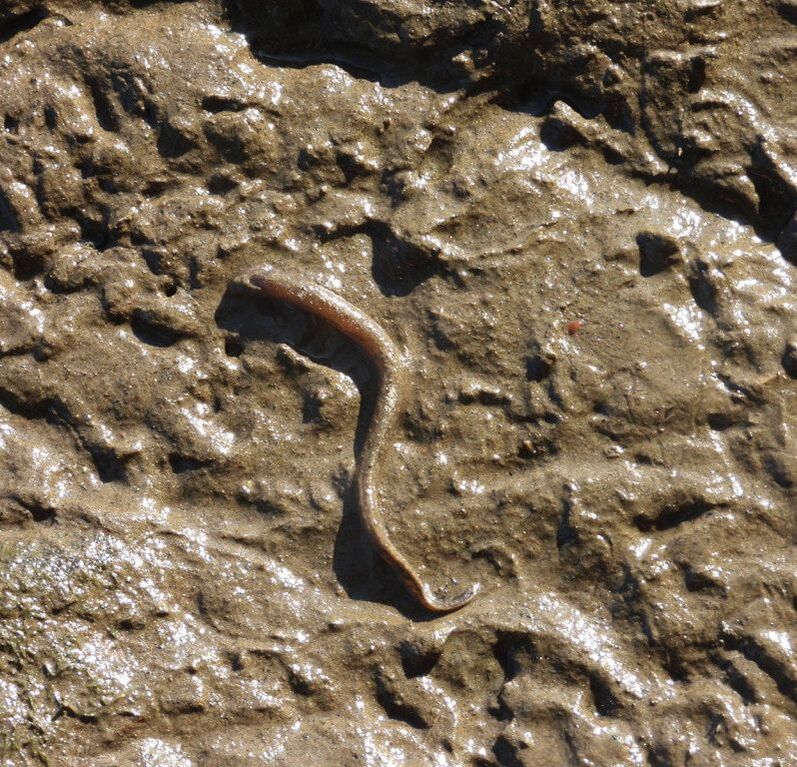
Thousands of lamprey were seen struggling and dying while faulty dam repairs were underway. Photo by Kirk Blaine.
Fish Passage & Ecological Impact
The disintegrating, 17-foot-high, 135-year-old Winchester Dam imposes a partial barrier to native salmon, steelhead, cutthroat trout, threatened Oregon Coast coho, and culturally significant lamprey. It remains
Oregon's 2nd highest-priority
privately-owned structure for fish-passage correction, limiting access to over
160 miles
of quality cold-water habitat.
Upgrades would cost an estimated
$100 million,
whereas removal – widely supported by conservation groups – could be completed for between
$3 and
$6 million,
with minimal cost to the community. Environmental groups, led by WaterWatch of Oregon, have offered to fund removal at little or no expense to WWCD, reflecting a spirit of collaboration and restoration over conflict. With wild fish populations imperiled, it is past time to remove such an impactful and unsafe river-spanning structure.
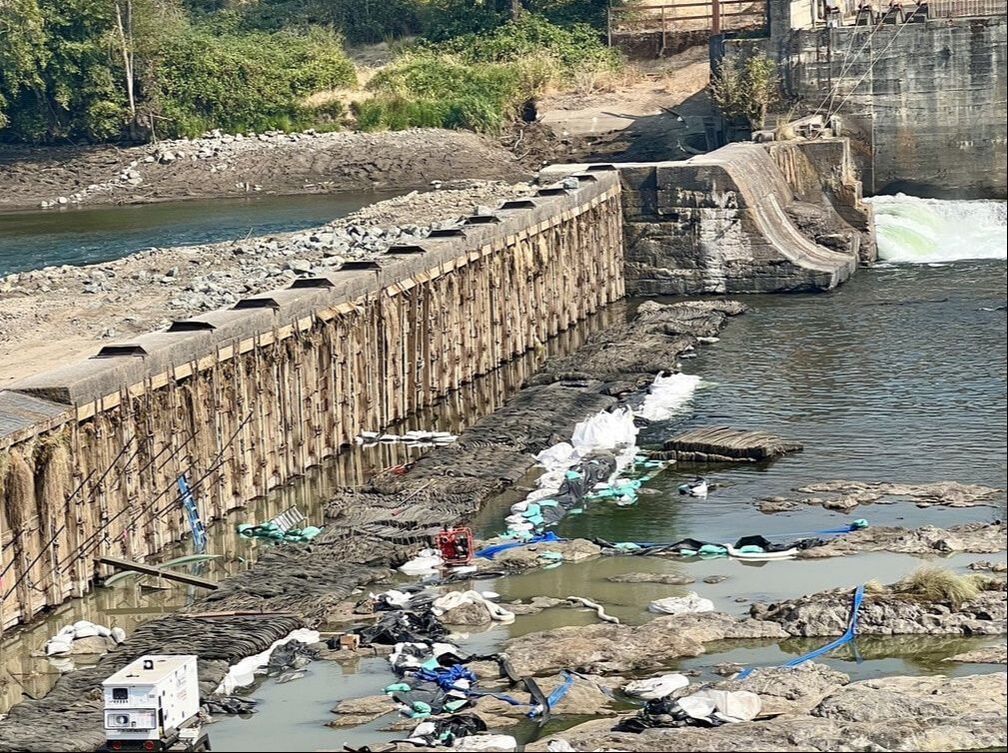
Rubber mats being used as a temporary road surface at Winchester Dam, August 2023. Photo by Kirk Blaine.
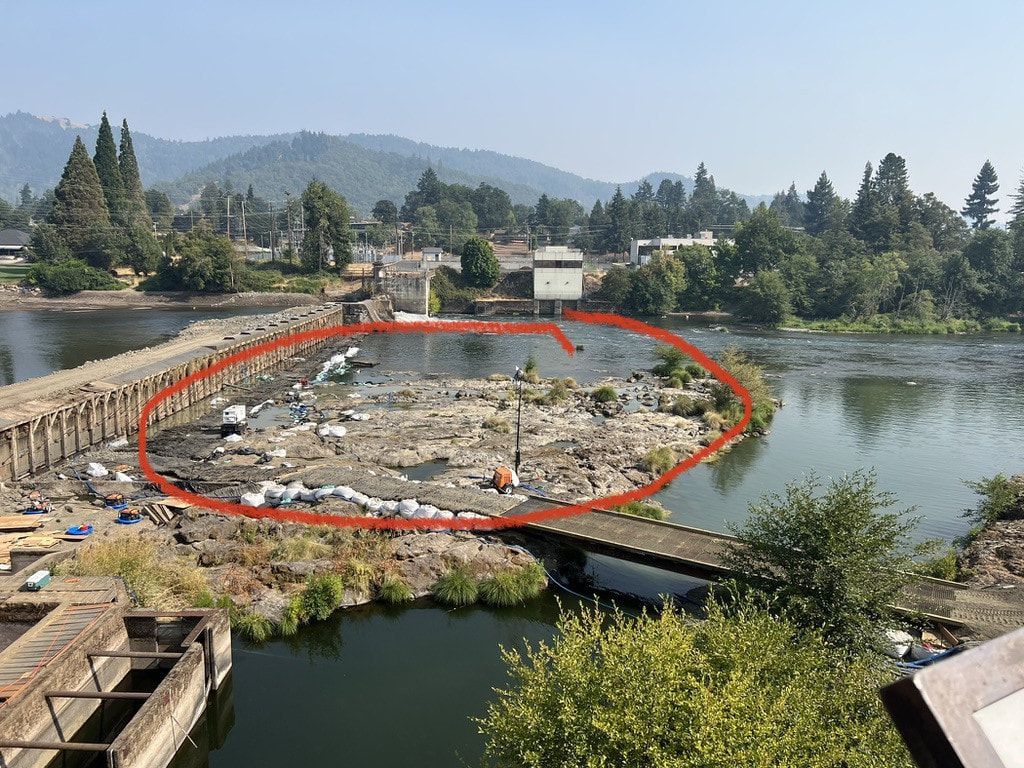
Concrete seepage into the North Umpqua River, August 2023. Photo by Kirk Blaine
Moving Forward Together
Winchester Dam represents a challenge due to its legacy of harm to fish and violations of environmental regulations. But the opportunity is what we look forward to: legal and regulatory avenues are converging on removal as the most effective, timely solution. We remain hopeful that this becomes the turning point when law, science, and community converge to protect the Umpqua’s wild legacy – and pave the way for a free-flowing river and unimpeded wild fish passage at this location.
From the Sanctuary’s future to hatchery reform and the removal of one of the state’s worst fish barriers, Pacific Rivers is on the front lines. With our leadership of the North Umpqua Coalition, we're also uniting partners for bold, coordinated action.
This work is big, and it’s urgent. But with your support, it’s possible.
- Support our work by making a donation today.
- Interested in becoming a business or foundation partner? Email us at info@pacificrivers.org.
- Follow along with our journey on our Instagram page.